Table of Contents
- How Interest Rates Shrink Buyer Purchasing Power
- What the Colorado Springs Market Data Tells Sellers
- Pricing Strategy Adjustments That Account for Rate Realities
- Rate Buydowns as a Pricing Tool
- Mistakes Sellers Make When Rates Are High
- How to Build a Rate-Aware Pricing Strategy
- Conclusion: Pricing Is Not Guesswork in a Rate-Sensitive Market
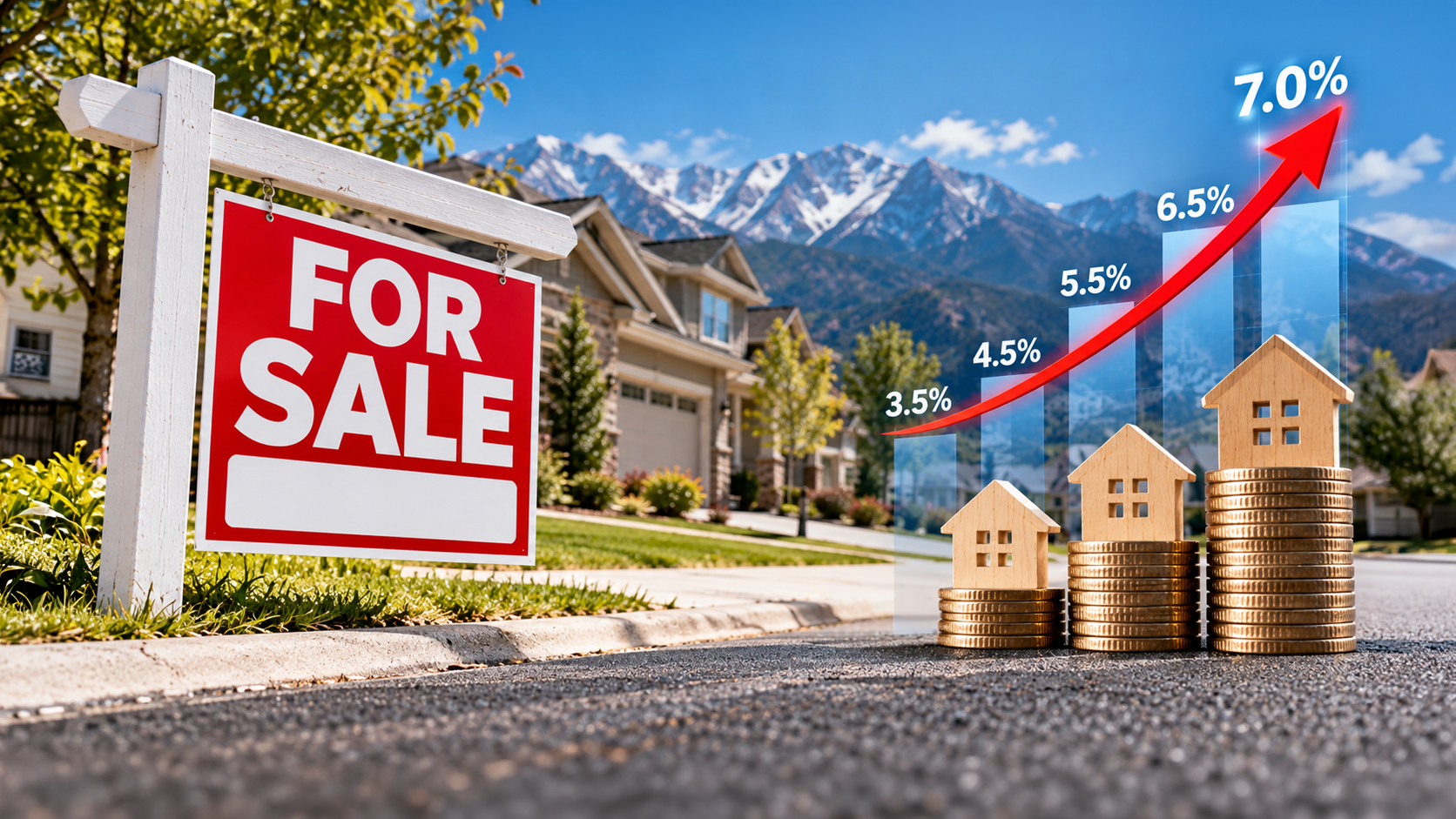
Mortgage rates sitting near 7 percent change the math for every seller in the Pikes Peak region. The interest rate impact on buyer purchasing power is direct and measurable: a buyer who qualified for a $450,000 home at 3.5 percent now qualifies for roughly $350,000 at 7 percent, assuming the same income and down payment. That gap does not disappear because a seller lists at yesterday’s price. It shows up as silence: no showings, no offers, or low offers that feel insulting but are actually logical.
Sellers who understand this dynamic price to the market as it exists. Those who ignore it sit on the market for 60, 90, or 120 days and eventually reduce anyway, usually for less than they would have accepted on day 30. This article breaks down exactly how the interest rate impact reshapes buyer behavior, what that means for your list price, and what concrete steps you can take to sell without leaving equity on the table.
How Interest Rates Shrink Buyer Purchasing Power
The Federal Reserve’s rate decisions flow directly into mortgage pricing. When the Fed tightened aggressively through 2022 and 2023, 30-year fixed rates climbed from the low 3s to the high 6s and eventually settled around 7 percent by mid-2024. Buyers did not disappear, but their budgets compressed significantly.
Consider the arithmetic. On a $400,000 loan at 3.5 percent, the principal and interest payment runs about $1,796 per month. At 7 percent, that same loan costs approximately $2,661 per month. That is an $865 monthly difference, or roughly $10,380 per year. Lenders underwrite to debt-to-income ratios, so that payment increase directly reduces how much home a buyer can finance.
A buyer’s purchasing power can drop by $80,000 to $100,000 when rates move from 3.5 percent to 7 percent, with no change in their income or creditworthiness.
This is not abstract. It is the specific reason the Colorado Springs housing market shifted toward buyers as of mid-2024, with inventory rising and sales slowing simultaneously. When fewer buyers can afford any given price point, competition drops and sellers lose leverage.
What the Colorado Springs Market Data Tells Sellers
As of mid-2024, Colorado Springs inventory had climbed and days on market had extended noticeably compared to the frenzied pace of 2021 and 2022. Those conditions have persisted. Homes that would have sold in a weekend with multiple offers now require weeks of market exposure and often need a price adjustment before finding a buyer.
The Inventory Shift
More homes on the market means buyers have options. When a buyer can choose between three comparable homes in Wolf Ranch or Banning Lewis Ranch, they do not feel pressure to waive inspections or offer above asking. They negotiate. Sellers who priced based on 2022 comps are competing against sellers who have already adjusted, and that is a losing position.
The interest rate impact compounds this inventory effect. Higher rates reduce the pool of qualified buyers. A smaller pool spread across more listings means individual homes sit longer. The longer a home sits, the more buyers assume something is wrong with it, which drives offers lower still.
Concessions Are Now Standard, Not a Concession
In a normalized market with rates near 7 percent, buyer concessions have returned as a standard feature of transactions. Common concessions include:
- Seller-paid closing costs (typically two to three percent of the purchase price)
- Rate buydown contributions, where the seller funds a temporary or permanent rate reduction
- Repair credits negotiated after inspection
- Flexible closing timelines to accommodate buyer financing contingencies
Sellers who build concession capacity into their pricing strategy close faster and with fewer surprises. Those who price at the ceiling and refuse concessions often end up granting them anyway after 60 days on market, from a weaker negotiating position.
Pricing Strategy Adjustments That Account for Rate Realities
Adjusting for the interest rate impact does not mean slashing your price arbitrarily. It means pricing to where qualified buyers actually exist, not to where you wish they existed. There is a meaningful difference.
Start With an Accurate Current Value
Automated valuation tools lag the market. They pull historical transaction data, which in a shifting market means they often reflect prices from six to twelve months ago. A professional comparative market analysis looks at active listings competing with your home right now, not just what sold last spring.
If you are a seller in Colorado Springs, getting a current, data-driven home value assessment is the non-negotiable first step. You can request one through the Vantegic Home Team’s home valuation tool, which pulls real-time local data rather than relying on national averages that do not reflect El Paso County conditions.
Price to the Buyer’s Payment, Not Just the Purchase Price
Sophisticated sellers think about what their list price means to a buyer’s monthly payment. At 7 percent, the difference between listing at $500,000 and $485,000 is approximately $100 per month in principal and interest. That $100 can move a buyer from “can’t qualify” to “approved.” Pricing at the right threshold opens the door to a meaningfully larger buyer pool.
This is especially relevant in neighborhoods like the Powers Corridor and Fountain, where buyers are often first-time purchasers or military families on tight VA loan budgets. A $15,000 price adjustment at that end of the market can be the difference between one showing per week and four.
Pre-Listing Improvements With Measurable ROI
Not every dollar spent before listing returns a dollar at closing. In a buyer’s market, buyers are already skeptical. Deferred maintenance becomes a negotiating weapon. High-ROI improvements that reduce buyer objections include:
- Fresh interior paint in neutral tones
- Professional carpet cleaning or replacement of worn flooring
- HVAC service and documentation, which removes a common inspection concern
- Landscaping cleanup and curb appeal improvements
- Kitchen and bathroom fixture updates that photograph well
Cosmetic improvements that make a home feel move-in ready reduce the mental discount buyers apply when they walk through a dated property. That mental discount is often larger than the actual cost of the improvement.
Rate Buydowns as a Pricing Tool
One of the most effective ways to address the interest rate impact for buyers is the seller-funded rate buydown. Rather than reducing the purchase price by $10,000, a seller can allocate that same amount to buy down the buyer’s mortgage rate for the first one to three years of the loan.
A 2-1 buydown, for example, reduces the buyer’s rate by two percentage points in year one and one percentage point in year two, then reverts to the note rate in year three. On a $400,000 loan at 7 percent, this can reduce the first-year payment by over $500 per month. That payment relief is often more compelling to a buyer than an equivalent price reduction, because buyers feel the monthly payment every month.
This strategy works particularly well for military buyers using VA financing in areas like Northgate near the Air Force Academy or in communities close to Fort Carson. VA loans allow seller concessions up to four percent of the purchase price, which creates real flexibility for structuring buydown offers.
Mistakes Sellers Make When Rates Are High
After 22 years in this market, I have seen the same patterns repeat whenever conditions shift. The interest rate impact catches sellers off guard when they rely on outdated assumptions. The most common mistakes are:
- Pricing to a 2021 or 2022 comparable sale without adjusting for the rate and inventory environment that existed then versus now
- Refusing all concessions as a matter of principle, then granting larger ones after a price reduction
- Skipping pre-listing preparation and assuming buyers will overlook deferred maintenance in exchange for a lower price
- Waiting for rates to drop before listing, which cedes months of equity to carrying costs and risks listing into a more competitive market if other sellers have the same idea
- Overweighting the Zestimate or other automated tools that do not account for neighborhood-specific absorption rates
Each of these mistakes is correctable. None of them are fatal if caught early. The problem is that sellers often recognize them at week eight of a stale listing, not week one.
How to Build a Rate-Aware Pricing Strategy
A structured approach to pricing in a high-rate environment follows a clear sequence. The steps below apply whether you are selling in Briargate, Black Forest, Monument, or anywhere else in El Paso County.
- Get a current CMA that uses active, pending, and sold data from the last 60 to 90 days, not the last 12 months.
- Identify your buyer profile. Who is most likely to buy your specific home, and what rate environment are they operating in? VA buyers, FHA buyers, and conventional buyers each have different constraints.
- Model your concession budget. Decide in advance how much you are willing to contribute to closing costs or a rate buydown, and factor that into your net proceeds calculation before you list.
- Set a price that generates showings in the first two weeks. If you are not getting showings, the market is telling you something. Act on that signal within 14 days, not 45.
- Complete targeted pre-listing improvements that address the objections most likely to surface in your price range and neighborhood.
- Review your strategy weekly with your agent using real-time showing data, feedback, and competitive listing activity.
The Vantegic Seller’s Guide walks through each of these steps in detail, including how to read showing feedback and when a price adjustment is the right call versus when a marketing adjustment is the right call. Those are different problems with different solutions.
Conclusion: Pricing Is Not Guesswork in a Rate-Sensitive Market
The interest rate impact on Colorado Springs home sales is real, measurable, and not going away on any timeline that should affect your listing decision today. Buyers are working with compressed budgets. Inventory has given them alternatives. Sellers who price strategically, prepare their homes carefully, and structure concessions intelligently are still closing at strong numbers. Sellers who resist the market’s signals are sitting on the market and eventually selling for less.
The goal is not to give your home away. The goal is to price it where the actual buyer pool lives, reduce friction in the transaction, and close on a timeline that protects your equity and your plans. That requires current data, a clear strategy, and honest assessment of what the market will bear right now.
If you are preparing to sell in Colorado Springs and want a pricing strategy built around current rate conditions, the Vantegic Buyer’s Guide can also help you understand what buyers in your price range are experiencing, which is useful context for any seller. For a direct conversation about your specific property and neighborhood, reach out to the Vantegic Home Team at (719) 302-0602 or jose@vantegic.com.
Frequently Asked Questions
How do current interest rates affect what a buyer can afford?
Higher interest rates significantly reduce a buyer's purchasing power. For example, a buyer who could afford a $450,000 home at a 3.5% interest rate can only afford around $350,000 at a 7% rate, assuming the same income and down payment. This is because the monthly principal and interest payment increases substantially, limiting the total loan amount lenders will approve.
What does increased inventory mean for sellers in Colorado Springs?
With more homes available on the market, buyers have more choices and feel less pressure to make quick decisions or waive contingencies. This shift means sellers are competing against each other, and homes that might have sold quickly in a low-inventory market now require more time on the market and often a price adjustment to attract an offer.
Should I price my home based on past sales or current market conditions?
You should price your home based on current market conditions and what qualified buyers can afford today, not on past sales data from a different interest rate environment. Automated valuation tools often lag, reflecting prices from six to twelve months ago. A professional comparative market analysis that considers active listings and current buyer budgets is crucial.
What are common concessions sellers are offering in the current market?
In a market with rates around 7%, buyer concessions are becoming standard. These commonly include seller-paid closing costs, contributions towards a rate buydown to lower the buyer's initial monthly payments, repair credits after an inspection, and offering flexible closing timelines. Building these potential costs into your pricing strategy can lead to faster sales.
What is a rate buydown and how can it help my sale?
A seller-funded rate buydown is a tool where you allocate funds to temporarily reduce a buyer's mortgage interest rate for the first one to three years of the loan. This can be more appealing to buyers than an equivalent price reduction because it directly lowers their monthly payment, making the home more affordable in the short term and potentially leading to more compelling offers.